
Don’t always listen to what the “old-school mechanics” tell you. While this article focuses on my own Alfa Romeo 156 Selespeed, the logic here applies to almost any single-clutch automated manual transmission (AMT).
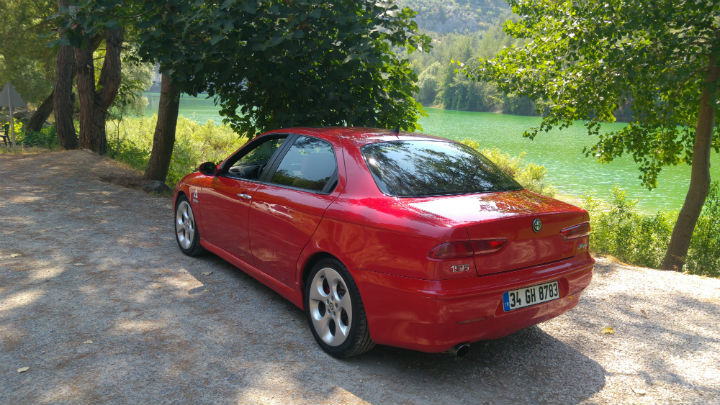
This article is largely adapted from a topic originally published on the Alfisti Turkey forum and formatted for this blog. The Turkish version and the English one may differ.
First of all, what exactly is a Selespeed? When you go to buy a car, things labeled as “automatic” usually fall into a few categories. There’s the classic “torque converter” type—the one that creeps forward when you let go of the brake. Then there’s the “dual-clutch” (like the famous/infamous DSG). Less common ones would be CVT variants. But the Selespeed belongs to a category called Robotized Manuals. It’s the same logic as a manual gearbox; it has a clutch, a pressure plate, and gears; but no clutch pedal and a physical shifter connection to the gearbox.
Long before dual-clutch systems became mainstream, there were single-clutch robotized manuals. Selespeed was the first of its kind offered to “mere mortals.” You see similar systems under names like Ferrari F1, Lamborghini E-Gear, BMW SMG, Fiat Dualogic, and Opel Easytronic. Put simply: they took a standard manual gearbox, sat a robot on top of it to do the shifting for you, and threw the clutch pedal away.
Today’s topic is “How to drive a Selespeed”. I’ll share how to live with one and what “normal” behavior looks like. This should be helpful whether you own one or are testing a used car to buy. My experience is based on a 2003 second-generation 156, but the 147 and GT work largely the same way.
The best mental model for the Selespeed is this: It is a manual gearbox where a very skilled driver is sitting next to you, operating the clutch and shifting gears on your behalf. She knows how fast you are going, what gear you are currently in, what gear you want to be in next, rpms, and perhaps most importantly, the way you are pressing the throttle. And it is crucial to remember that it does not have a telepathic link with you! If you treat the throttle like you would in a manual car, you’ve already solved 90% of the mystery.
Starting the Engine
When you open the driver’s door, you’ll hear a whirring sound—that’s the Selespeed pump priming the system with pressure. Turn the key, wait for the check lights to go out, keep your foot on the brake, and start. The car will automatically move to Neutral, ant the engine will start. The brake requirement is a safety feature to ensure you don’t accidentally “lunge” into a wall while starting.
Moving Off
This is where most people struggle. The keyword is decisiveness. Remember how you would use the throttle pedal if you were driving a manual.
The Selespeed gauges your intent based on throttle position. When you tap the gas, it prepares the clutch. If you floor it before the clutch has found the biting point, the car will lunge forward. Instead, give it a light, steady touch. You will feel the “bite.” Hold it there for a split second as the car begins to roll, then accelerate.
The Selespeed calculates a “Torque Transfer Table” based on how fast and how far you press the pedal. If you “hesitate” or pump the pedal during a parking maneuver, the computer has to constantly recalculate its profile. This is why some people “bunny-hop” while parking. As I said above, someone is sitting beside you and she is handling the clutch. You press the throttle, she understands that she needs to “release the clutch pedal” with a certain profile -and just as she was doing that, you change the pedal position, forcing her to recalculate. She would possibly swear at you. I think Selespeed’s “bunny hop” is less offensive. 🙂
Anyway. Be steady, be predictable, and the robot will reward you.
Hill Starts
If your Selespeed doesn’t have a “Hill Holder” (and many don’t, like the 156), don’t panic. The Selespeed actually does a better job of holding a car on a slope than most human drivers. The trick here is to be quick and deliberate. Remember once more that Selespeed detects intent from the throttle pedal. You are not moving, and there is no throttle input. Then no close-clutch operation. The car rolls when you release the brake pedal. Usually not towards the direction you want!
So, as soon as you release the brake, touch the throttle. It will immediately move to a “half-clutch” state. Add a bit of throttle (input), off you go.
Pro-tip for steep hills where the car would roll no matter how quick you are with your foot: You have a redundant left foot! Put your left foot on the brake, touch the throttle pedal with your right until you feel the engine strain against the brake (the bite), then release the left foot.
Shifting Gears: “Don’t lift off!”
Most people advice “helping” Selespeed by lifting your foot off the throttle pedal on gearshifts, adding it will make you nod your head otherwise. In fact, it requires a lot of experience to use the throttle pedal for a “seamless shift”; you would need to back off at precisely the correct time, press again at precisely the correct time, and do this at precisely the correct throttle position, according to what gearshift is occuring, what speed you’re traveling at, how loaded is the car at that precise moment, etc.
Complicated, right? Yes! That’s the whole reason you shouldn’t chase this! What you need to do is to keep your foot at the same pedal position during the gearshift. Don’t release, but don’t press more either. Most people tend to press a bit more during shifts, as they instinctively try to compensate for the drop in the rate of acceleration. Others release the throttle from their previous experience with manual transmissions. This causes the jerk.
When Selespeed is changing gears, it takes the throttle control away from you. That’s why any throttle input change is irrelevant. It affects what happens after the gear change though.
Does this mean Selespeed shifts can occur as seamless as a torque converter or DSG? In a very, very limited set of circumstances, perhaps. But you need to understand the nature of the process. There will always be a gap of around 0.5 seconds (depending on your driving profile), and Selespeed seems to hate slipping the clutch. If you were accelerating quickly, it will want to close the clutch as fast as possible, as it assumes you want pace at all costs. There’s your “kick”. If you were accelerating moderately, but release the throttle to trigger an upshift, it will take maybe 0.7 seconds, at a time where your brain is anticipating more acceleration. There’s your nod. In my experience, a calm drive is where almost seamless shifts occur.
Interestingly, Selespeed takes longer to shift up than to shift down. Why? Because it has to wait for the engine RPM to naturally drop to match the higher gear’s speed. When shifting down, it can “blip” the throttle (rev-matching) to sync speeds instantly. This is why downshifts in a Selespeed often sound and feel much “sportier” than upshifts.
Avoiding the logic trap
The most common “confusion” happens when the driver and the Selespeed try to shift at the exact same time. If the Selespeed decides to downshift for a hill and you pull the paddle at the same time, it might drop two gears at once.
Selespeed follows the philosophy of “The driver sees the road, I don’t.” If you ask for a gear, it assumes you have a good reason (like an oncoming car during an overtake) and will execute your command even if it’s already busy with its own, performing both downshift requests (one from you, one from itself).
This usually happens when you press the accelerator pedal too early, especially in City mode. Assume you’re going in 3rd gear, low rpm. You want to overtake the car in front of you. You depress the throttle pedal, which triggers a downshift event with Selespeed. A fraction of a second after you press the throttle, you pull the left shift paddle to request a downshift from Selespeed. Selespeed assumes you might be in a tight spot and does both, dropping you to 1st gear, with a loud throttle blip! When this happened to me first, I was with my wife, and she said “look at the car, it gets angry if the car in front of it is not as quick as it wants”.
The Most Common Mistake: Burning the Clutch
Never hold the car on a hill using the throttle. In a manual car, you know this smells like burning. In a Selespeed, the computer is so precise that you might not realize you’re doing it until the “Overheat” light comes on.
In this mode of operation, the engine is turning, but the wheels and of course the transmission is not. The car is not rolling backwards, so there must be at least some connection to the engine. And obviously, something must allow for this difference in speed. That’s your poor clutch. And friction means temperature, along with increased wear.
In a manual car, there is no sensor for clutch temperature—it just smokes. In a Selespeed, the car is smart enough to warn you: “I’m burning up!” If you see this light, either commit to the move and move forward (fully engaging the clutch) or pull over and stop. You want to achieve no-friction; either by fully “closing” the clutch, or fully opening to break contact.
Because Selespeed operates the clutch more precisely than a human, a well-driven Selespeed can actually have a longer clutch life than a manual equivalent. Just think about how many times you have actually waited until your revs have dropped down to match the transmission revs, or what percentage of your daily shifts you actually even try to rev-match. Zero, right? Every single one of these events are timed for minimal slip with Selespeed. Oh, and there is the 1st gear ratio; the first gear with 156 Selespeed is shorter than its manual counterpart, allowing for less clutch slip
Stopping and parking
Selespeed in 156 does not have a “P” position. It doesn’t need one. Just stop your car and turn the ignition key to off. Maybe shift to R if you’re on a hill, the front of the car facing downhill.
The reason torque converter automatics have a dedicated P (Park) position is a consequence of their design. The engine is isolated from the transmission and everything behind it, including wheels. With Selespeed, just like in a manual, the engine is connected to the wheels. And turning the engine is not easy, so as long as the wheels are connected to the engine, they will not turn easily. Torque converters prevent roll by a mechanical locking mechanism. With DCTs, I believe it depends on the system, but to my knowledge DSG at least is designed to use a similar locking mechanism, hence the P position -but don’t quote me on this, I’ve never worked on a DSG or another DCT.
Other complaints until you understand the system
Well, the steep hill right after the intersection. There are cases where you have slowed down in second gear, but you’re not slow enough to trigger a shift to 1st gear. Like an intersection where you would, say, turn right, straight into a climb. You will most likely need extra acceleration, add some throttle pedal movement, and if Selespeed’s calculations result in “nope, we can’t accelerate like this in 2nd gear at this time”, it drops to 1st gear. You instinctively press the throttle pedal more. And when it is done with dropping to 1st gear, you get caught in a “too low gear, too high power” situation, which would provide considerably more acceleration than your previous state, sometimes exceeding front end grip.
Another case is the “roundabout hang”. You entered an intersection, want to accelerate towards an exit, and you see a car approaching faster than you’d like. You hit the throttle. For the same reason above (Nope, we can’t accelerate…), it will start changing gears, all the while you are going through an emotional moment looking at the oncoming car.
This also goes for overtaking; you want to accelerate, but Selespeed doesn’t know what you’re trying to do until you press the throttle enough. What you get is acceleration slower than you’d like, a pause, and a surge.
I always recommend drivers to select the gear manually in these conditions. It’s simple, and usually quicker when done deliberately.
Treat it like a manual, maintain the sensors, and it will give you one of the most engaging driving experiences this side of a 1990s Ferrari.